Sunday 22 February 2026 07:25
| Updated:
Friday 20 February 2026 14:44
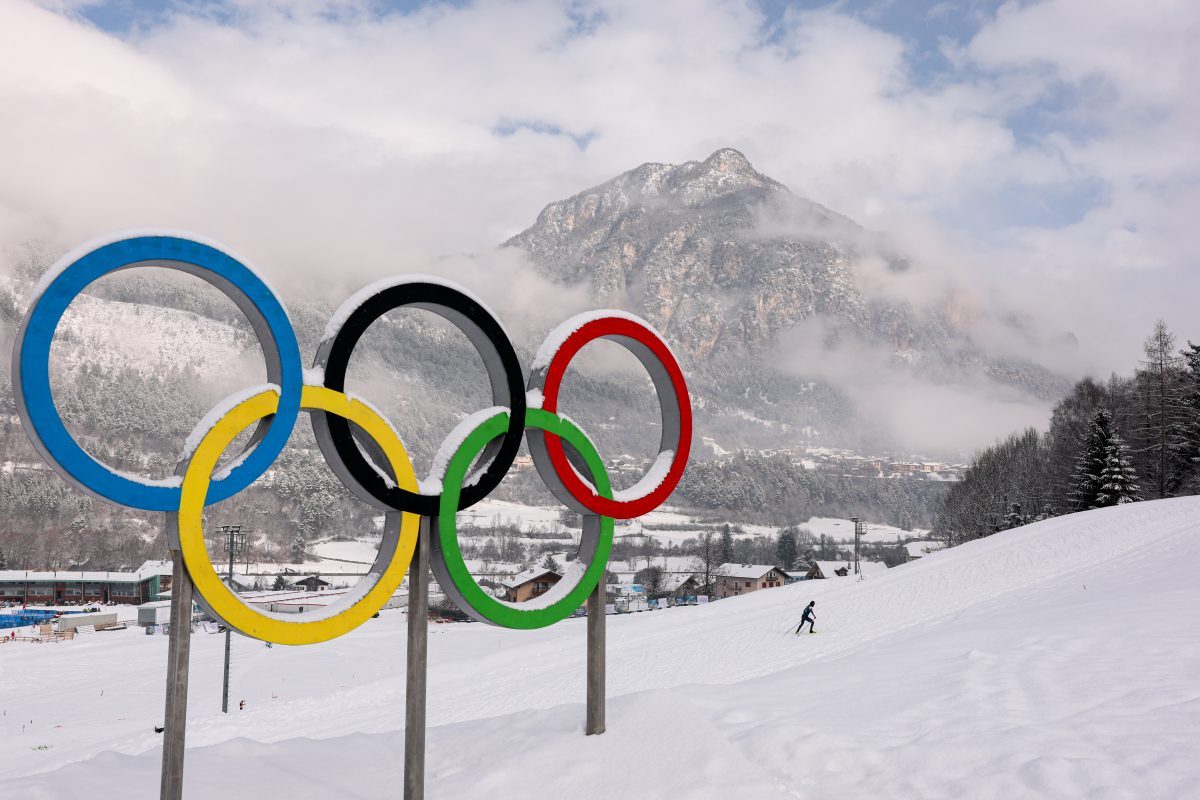
What will amaze you when attending the Milano Cortina Winter Olympics is not just the spectacle, but the structure.
Many cities. Regional cluster. Existing places are reused. Iconic cultural background. This is an Olympics shaped by pragmatism and fiscal discipline as well as prestige.
The spread model may have dampened the traditional buzz about the host city, but Milano Cortina presents an interesting formula.
More than 1.25 million tickets were sold with an additional 250,000 visitors to the fan village in the first week alone. Record broadcast, streaming, and digital engagement rates too.
This raises serious questions: can Britain mount a credible Winter Olympics bid – and does a bold bid for 2038 make business sense?
At first glance, the ideas seem geographically incongruent. England has no Alps, no guaranteed snow, no rolling tracks or indoor speed skating ovals. Hosting the Winter Olympics feels like someone else’s field.
Changing the Winter Olympics model
But the Olympic model is changing. The International Olympic Committee is now prioritizing cost control, infrastructure reuse and cross-border flexibility. The era of mega-city building – and its financial risks – is fading.
The shift creates opportunities, if approached with commercial logic rather than nostalgia.
Edinburgh–Glasgow 2038: low capital model. Imagine an offer anchored in two proven event cities.
Edinburgh with its global stage is renowned for its ceremony, culture and prestige, and Glasgow — a well-established center for indoor sports, host to the 2014 Commonwealth Games and numerous world championships in athletics, gymnastics and cycling.
Both have infrastructure for ice hockey, figure skating, short track and curling, as well as venues for opening and closing ceremonies. This alone reduces the capital risks that have undermined previous offerings.
Rather than building from scratch, the 2038 bid could focus on improving existing arenas and transportation. For alpine, Nordic and sliding competitions, a partnership with Norway could take advantage of Olympic-class venues in Oslo and Lillehammer. Flight time from Scotland to Oslo is around 90 minutes — operationally feasible and commercially manageable.
Record range
If there was any doubt about the commercial power of the Winter Olympics, Milano Cortina has answered it. Broadcasting and digital engagement reached record highs.
In the United States, NBCUniversal reported audience growth of more than 90 percent compared to Beijing in 2022. Streaming consumption reached billions of minutes, although time zones played a role in the growth.
Warner Bros. Discovery described Milano Cortina as the most streamed Winter Olympics ever. By the first weekend, nearly 31 million Italians – more than half the population – had watched the coverage on national TV.
IOC digital platforms surpass 100 million users, with social engagement doubling in Beijing by 2022.
The Winter Olympics are no longer a special event for mountainous countries. With 92 National Olympic Committees competing, and strong viewership growth reported in southern hemisphere markets such as Australia and Brazil, they are now a global media property spanning broadcast, streaming and social.
For the UK, hosting is more than just a sporting event. This will provide a multi-week international platform; increasing tourism, increasing sponsorship and strengthening the UK’s organizational and commercial credibility.
The audience is there. The challenge is to get value without disproportionate risk and the strongest business case lies in sustainability.
England 2038?
Public tolerance for underutilized mega projects has declined sharply. Investors and partners now assess events through environmental and financial impacts. A 2038 offering that builds largely on existing sites changes that equation.
This avoids speculative speed skating rinks, mountainous buildings vulnerable to climate change, and single-use infrastructure with a weak legacy. Instead, they offer an Olympics that is fiscally disciplined and in line with environmental realities and oversight of the procurement of goods and services.
One exception is worth debating: the national slide center in England. Despite having no home track, England has achieved consistent success in the sports of skeleton and bobsleigh. The purpose-built facility – designed as a year-round center for performances and events – could strengthen medal prospects and strengthen Scotland’s visible pool of winter sports.
But this case must stand separately from the Olympics, supported by events, tourism and long-term commercial viability. This will be strategic infrastructure, not Olympic fun.
The Anglo-Norwegian model would expand, not weaken, commercial opportunities. This will cover two winter sports markets, two media regions and two sponsorship ecosystems – while expanding ticket demand across northern Europe, and potentially strengthening north Atlantic trade.
Rather than concentrating economic activity in one mountainous region, it spreads opportunities and diversifies income.
London 2012 proved the UK was capable of hosting a global event. Glasgow 2014 and Birmingham 2022 strengthen it. The 2038 Winter Olympics bid will not repeat the past. This would modernize the model – a distributed, partnership-led Olympics built on fiscal discipline and sustainability.
The question is not whether England has mountains.
The question is whether Britain is ambitious enough to design a Winter Olympics that is financially credible, environmentally responsible and commercially attractive.
If the answer is yes, then 2038 is not an imaginary year. This is strategic.
Paul Garbett is director of brand marketing and communications at Sanlorenzo Yachts, having held roles at Aston Martin, CSM and Coral Racing.
News
Berita Teknologi
Berita Olahraga
Sports news
sports
Motivation
football prediction
technology
Berita Technologi
Berita Terkini
Tempat Wisata
News Flash
Football
Gaming
Game News
Gamers
Jasa Artikel
Jasa Backlink
Agen234
Agen234
Agen234
Resep
Cek Ongkir Cargo
Download Film

