
Friday 09 January 2026 06.15
| Updated:
Thursday 08 January 2026 17.30
The Lotus Emira has always felt like a good car with a great car trapped inside, trying to block its way out. Can the new Turbo SE unleash the Emira’s untapped potential? Driving every day for a few weeks will provide the answer…
The ‘Turbo Special Equipment’ badge is an evocative badge for Lotus fans (and I’m among them). First introduced in the 1989 Esprit Turbo SE, this meant to be the fastest Lotus road car ever at the time, complete with swoopy side skirts, a fixed rear wing, and 268 hp from a turbocharged and intercooled four-cylinder engine.
Today’s Turbo SE is also powered by a forced induction four, this time delivered to Norfolk in a crate by Mercedes-AMG. There’s no bolt-on bodykit, but the Emira doesn’t need one; it already resembles an eight-tenths scale supercar. Indeed, with the possible exception of the £2m Evija, this is the best-looking Lotus since the Esprit. Very precise.
The magic in the middle?
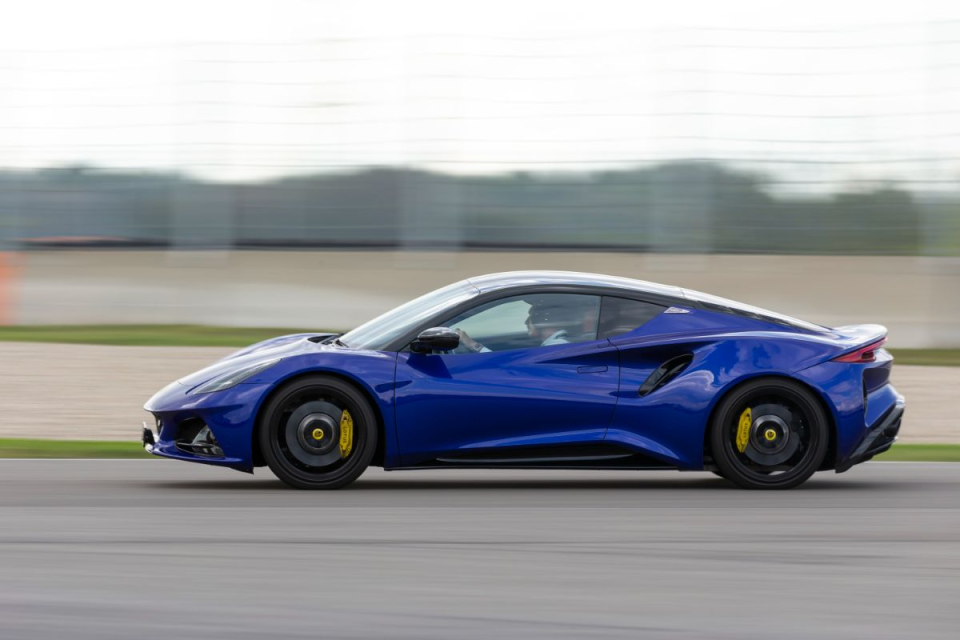
A little context before we get behind the wheel. The £89,500 406hp Turbo SE is the new middle rung in the model range, positioned between the entry-level 365hp, £79,500 Emira Turbo and the flagship 406hp, £96,500 Emira V6 SE.
Astute readers will notice the Turbo SE and V6 SE have identical power outputs. In fact, the two cars are quite different in character, with one major difference being the manual gearbox option on the V6. Both Turbo models – which use a version of the same 2.0-liter AMG engine – use an eight-speed dual-clutch automatic transmission.
Other key Turbo SE stats are 354lb-ft of torque, 0-62mph in 4.0 seconds, top speed of 181mph, 208g/km CO2 and a curb weight of 1,446kg. The latter, incidentally, weighs exactly double the 723kg quoted for the Elise when it was launched in 1995 (automotive nerds take note: this figure applies to the early Elise with its innovative metal matrix composite brakes).
If 1.5 tonnes sounds expensive for a Lotus, it’s worth noting that the Emira targets the more mainstream, less masochistic spectrum of sports cars. Standard equipment includes 12-way heated power seats, climate-controlled air conditioning, a 10.2-inch touchscreen, Apple CarPlay and Android Auto connectivity, and an excellent KEF audio system – not to mention adequate soundproofing and a decent roof. The Turbo SE is also equipped with the Lotus Drivers’ Pack, adding a sport suspension, cross-drilled disc brakes and launch control.
Bend like Becker
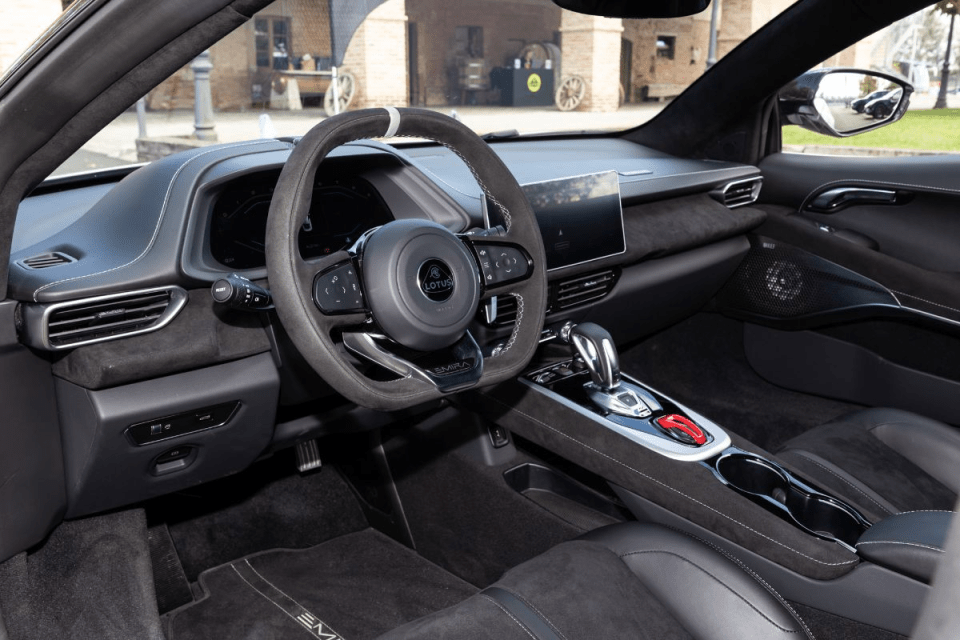
The price to pay for the Emira’s wedgy, plastic-wrapped styling is a lack of luggage space. There’s no ‘frunk’ whatsoever, and the slot-shaped boot behind the engine can only hold 151 litres. It’s also disappointing to see the AMG motor hidden behind a gray plastic cover. On the V6 (Toyota-powered) version, you can at least glimpse the supercharger through the rear window.
However, things get better when you get inside, especially as you get another 208 liters of storage space (for coats, soft bags or the like) in the narrow shelves behind the seats. Unlike its predecessor the Esprit, there is enough headroom and legroom for tall people to travel comfortably, with plenty of adjustment in the seats and steering wheel.
Looking through the sharp screen at the raised ‘Becker points’ above the front wings – named after legendary Lotus test driver Roger Becker, who recommended them to help judge the car’s width – the Emira feels comfortable, low-slung and distinctive. Although the touchscreen is central, the main controls are mostly physical switches – a contrast to the minimalist, technology-focused cabins of the Lotus Emeya sedan and Eletre SUV.
Likewise, although electric vehicles are made in China, Emiras are also made in Hethel, Norfolk: home to Lotus Cars since 1966. The Chapman Production Centre, which opens in 2022, now produces around 5,000 Emiras per year and the quality is top-notch. Closer inspection reveals tight body cladding lines, gleaming paint and neatly stitched leather.
Even some of the Volvo switchgear inside the Turbo SE is well made and neatly integrated. My only complaint, as a boring Lotus purist, is with the Lamborghini-style ‘bomb switch’ cover for the engine start button. Company founder Colin ‘Simplify, then add lightness’ Chapman would never agree to something unnecessarily ornate.
Driving Emira Turbo SE
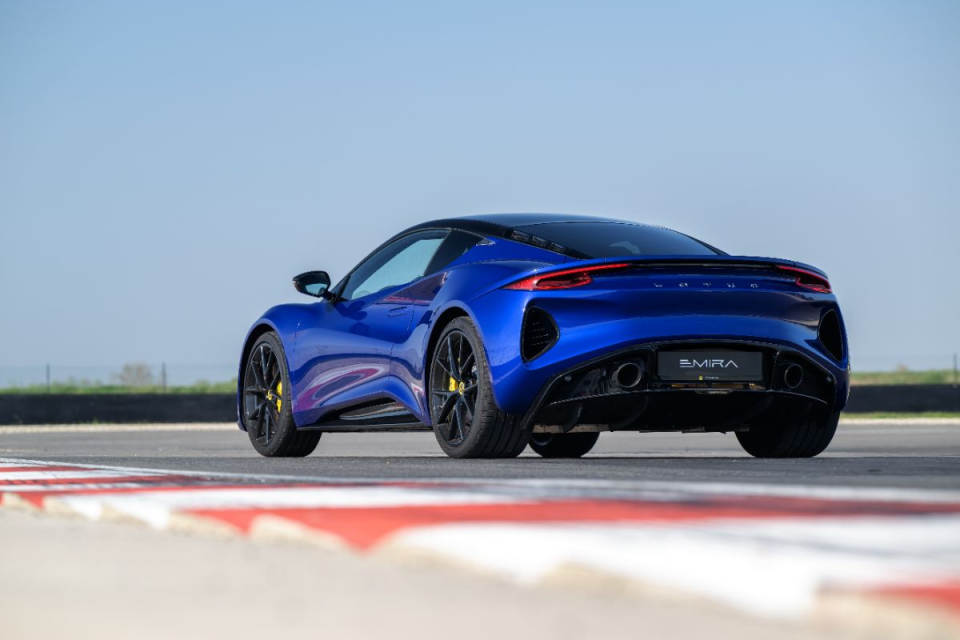
The use of the AMG ‘M139′ engine emerged because Lotus’ parent company, Chinese automotive conglomerate Geely, owns 10 percent of Mercedes-Benz shares. Mounted transversely in a bespoke aluminum subframe, it’s essentially the same unit used on the AMG A45 S hot hatchback, along with the new AMG GT43 coupe.
While the 3.5-litre V6 sits at the top of the Emira’s hierarchy, the four-pot engine in the Turbo model is equally muscular and far more refined. Technical highlights include a twin-scroll turbo, forged pistons, two-stage fuel injection, variable valve timing and a motorsport-style closed-deck crankcase.
However, for all its firepower, the Emira Turbo SE sounds underwhelming when you turn it on. The impatient growl of the A45 S coming to a halt is muted here; it’s only when you’re really working that the engine starts to gnaw through its valvetrain and reach its growling crescendo. The turbocharged sound also appears when you accelerate hard (exhalation sound) or when pressing the throttle in reverse (chirp and chatter from the wastegate).
If the soundtrack is somewhat disappointing, Emira’s performance is much more… disappointing. The combination of short gear ratios and abundant turbocharged torque means the engine is always bubbling and ready to boil. The supercar it looks like (Ferrari 488 GTB, anyone?) may have twice the number of cylinders and twice the power, but 400 hp feels like the sweet spot for a high-performance car. Frankly, on British roads, more is a game of less.
Emir: Drive from behind
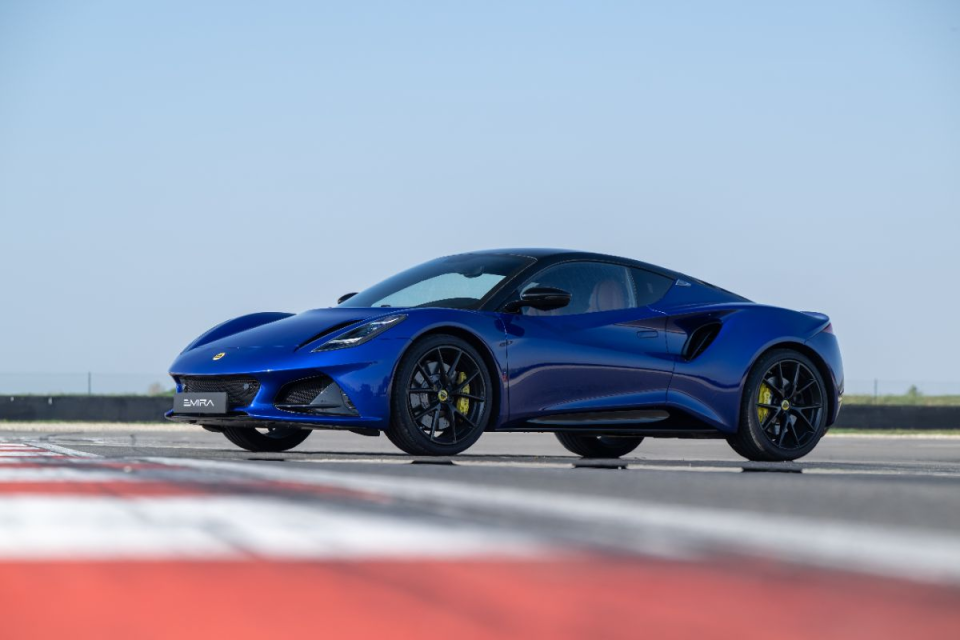
Emira Turbo SE also delivers in the dynamic department. Like McLaren Automotive, Lotus opted to retain hydraulic power steering, rather than switch to a fuel-saving electric system (almost universally adopted elsewhere). And any reduction in the car’s efficiency seems worth it: the Emira’s steering is a delight. Fast and beautifully weighted, it conveys the message of the road with great clarity. The thick, Alcantara-covered wheels are also very comfortable to touch.
Encounter a flowing B-road and the Lotus changes direction with the lack of inertia that only a mid-engined sports car can offer. Unlike many other vehicles with AMG engines, this one is precise and serious-minded, rather than a wayward, tire-smoking hooligan. You can point the Emira’s cornering nose to the apex, then trim its line with the throttle. There’s plenty of grip from the Goodyear Eagle F1 tires (stickier, although less winter-friendly Michelin Pilot Sport Cup 2s are a £400 option), the brakes inspire confidence and the rear e-differential works effectively.
The Turbo SE comes standard on the Sport suspension, which was fitted to my test car. However, I would switch to the (no-cost) Touring option if buying the Emira primarily for road use. Stiffer settings felt a little jittery and sometimes became irregular due to crushed or uneven surfaces. A little more flex would strengthen the traditional Lotus ‘flow’ – and make the car more comfortable for everyday use.
I also have to quibble with the Emira’s gearbox. For starters, you have to deliberately pull the lever twice every time you want to steer or reverse, which makes maneuvering difficult – especially if your foot doesn’t apply enough pressure on the brake, in which case the gear won’t engage. The paddle shifter action also feels more digital than mechanical, and the transmission doesn’t always respond with the quickness you’d expect from a DCT. While not a deal breaker, it doesn’t feel like a fitting foil for such a sharp chassis.
Verdict: Lotus Emira Turbo SE
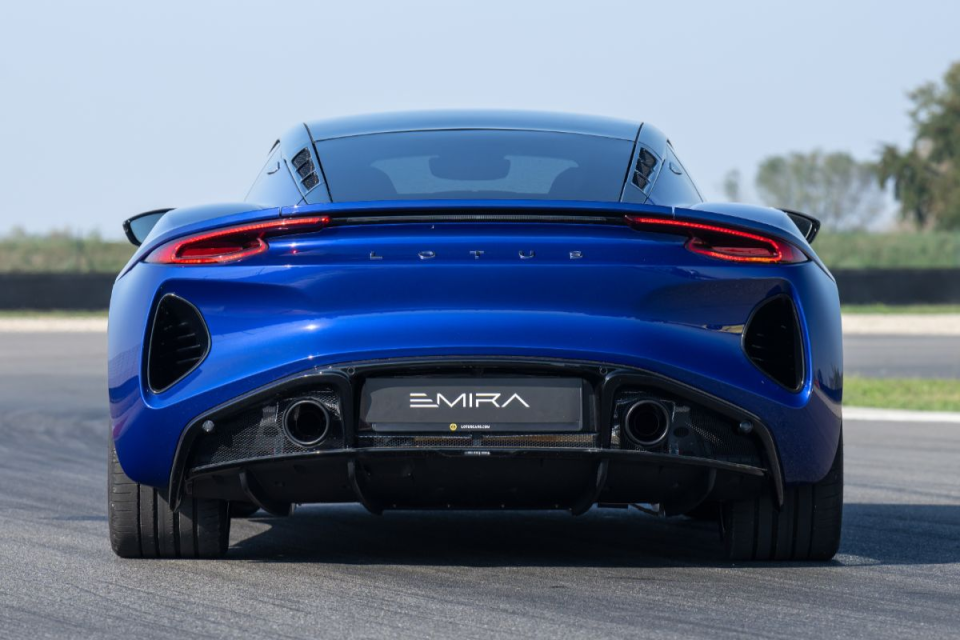
There’s a lot to like about the Emira Turbo SE. Despite some misgivings, it deepens my affection every time I ride it. And – road test cliché alert! – I actually took the long route home on several occasions.
For many people, the biggest obstacle is Emira’s price. When launched in 2022, the V6 First Edition will cost £75,995 and Lotus is confidently promising a four-cylinder version priced ‘under £60,000’. Four years later, an Emira Turbo SE with a few optional options can set you back six figures (my car was £105,995), which pushes it into Porsche 911 Carrera territory.
The Porsche, as you’d expect, is a more rounded and capable car. But not everyone wants to drive a 911 (or even a Cayman), and the Lotus will certainly attract more attention and get more approval. Every time I post a photo of it on social media, for example, the number of ‘likes’ easily surpasses that of any modern 911. The fact that Lotus is a British brand, despite being Chinese-owned, also resonates with me. Buying a sports car is not a rational decision.
Emira doesn’t achieve true greatness, but her flaws give her character, much like the Lotus of the past. We keep saying it, but cars like this really aren’t going to last much longer. And this is one thing you can hold on to and appreciate, long after the new car market has shifted to electric vehicles alone. In terms of choosing between the V6 and Turbo SE, it’s close, but I’d go with the V6 with the manual ‘box. Either way, your journey home may be longer and more winding than Google Maps or Waze suggests. Emira is that kind of car.
PRICE: £89,500
STRENGTH: 406 hp
0-62MPH: 4.0 seconds
HIGHEST SPEED: 181mph
FUEL ECONOMY: 30.8mpg
CO2 EMISSIONS: 208g/km
News
Berita Teknologi
Berita Olahraga
Sports news
sports
Motivation
football prediction
technology
Berita Technologi
Berita Terkini
Tempat Wisata
News Flash
Football
Gaming
Game News
Gamers
Jasa Artikel
Jasa Backlink
Agen234
Agen234
Agen234
Resep
Cek Ongkir Cargo
Download Film

